Educational
May 13, 2026
Social Electronic Commerce: How Social Media is Driving Online Sales (2026)?

Social electronic commerce is disrupting the era of 'search-and-click'. Opening a laptop, navigating to a cluttered website, and typing credit card information into a static checkout form feels like a chore to consumers.
American shoppers prefer fun, fast, and frictionless experiences, and social electronic commerce delivers exactly that.
Consumers discover products in a TikTok or Instagram video, tap a tag, read real-time reviews from friends, and check out without ever leaving the app. This convenience is what makes social shopping interactive and addictive.
Not surprisingly, American social shoppers grew from 96 million in 2023 to around 104 million in 2025. That makes it clear: this isn’t just another sales channel, but it’s the new way Americans shop. [Source: Statista]
Curious to know how social media is driving online sales? We, at Mark8 IQ, will discuss just that.
What is social electronic commerce?
Social electronic commerce, or social commerce for short, is all about buying and selling products directly inside social media apps and platforms.
Instead of hopping over to a separate website, customers discover products through friends’ posts, influencer videos, or algorithm-curated feeds. They then buy them with a tap or two.
Put simply, the social commerce meaning boils down to this: it merges the fun, interactive world of social media with the convenience of e-commerce.
Today, social shopping, or social commerce, is the core driver of the digital economy. Research backs this up. Research and Markets reveals that the market, already valued at $872 billion in 2025, will generate $992.38 billion in revenue in 2026.
In the U.S. alone, EMARKETER reports that social sales are surging. A consumer base that values convenience over the traditional search-and-click method is fueling this.
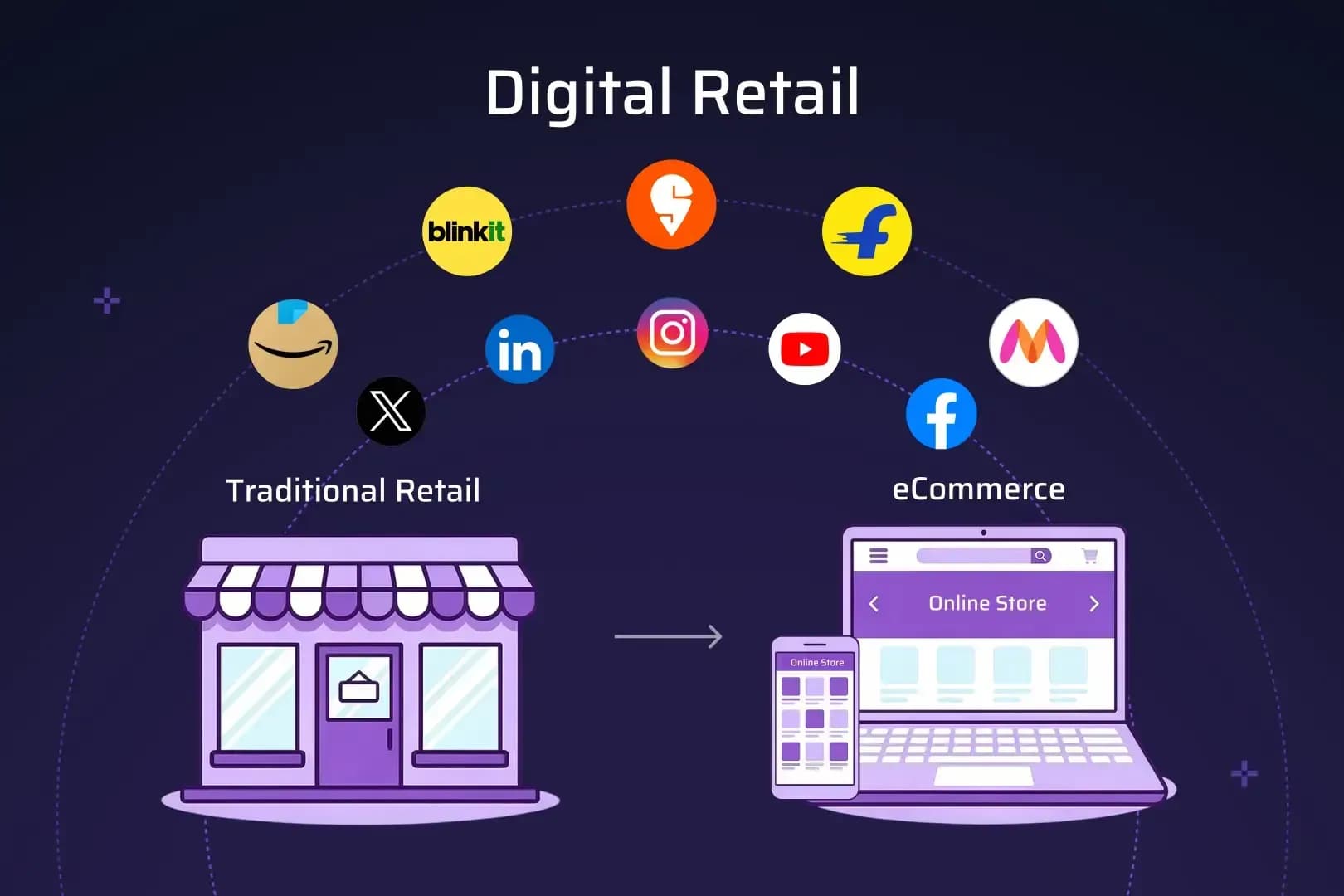
How is social electronic commerce different from traditional e-commerce?
Here, we’ll walk you through the difference between social electronic commerce and traditional e-commerce.
Platform-based shopping
When it comes to social commerce vs e-commerce, the biggest difference lies in the platform.
In social electronic commerce, everything happens inside the social app. There are no redirects, no extra logins; just tap, add to cart, and buy. Traditional e-commerce sends you to a separate site, which can kill momentum (hello, cart abandonment!).
Role of engagement and interaction
Social shopping thrives on real-time chats, comments, and community vibes. Customers see friends’ reactions or influencer demos live. Traditional e-commerce relies more on static reviews and star ratings.
Influencer-driven purchases
Influencers and everyday creators are the new salespeople. A relatable TikTok creator showing off a skincare routine can spark more sales than a polished ad on a traditional site.
Social shopping trends show U.S. consumers trust peer recommendations over celebrity endorsements, making influencer-driven purchases a huge driver in 2026.
What are the top social electronic commerce platforms?
A few major social electronic commerce platforms dominating the U.S. market are:
Facebook Shops
Despite the noise about newer platforms, Facebook remains a powerhouse, especially for Gen X and older Millennials. Its strength lies in its "Groups" and "Marketplace" features, which foster a sense of local and niche community trust.
Instagram Shopping
Instagram is the ultimate lookbook. It has transitioned from a photo-sharing app to a visual discovery engine. For brands in the beauty, fashion, and home decor spaces, Instagram’s "Checkout" feature allows users to complete a purchase without the "link in bio" hassle.
TikTok Shop
Of all the social shopping apps, TikTok has been the absolute disruptor. Its success lies in the "Algorithm of Desire." TikTok knows what you want before you do.
What strategies drive social electronic commerce success?
Want your brand to thrive in social electronic commerce? Here are social commerce strategies that can help turn scrolls into sales:
Influencer marketing
Tap into influencer marketing. Influencer-driven posts, mainly from influencers with 10k–50k followers, can boost conversions. That’s because many U.S. shoppers (especially younger ones) buy directly from their recommendations.
Short-form video content
If a picture is worth a thousand words, a 15-second video is worth a thousand conversions. Video is the primary language of social shopping. The "scrollytelling" format, which is videos under 60 seconds that demonstrate a product’s value quickly, is particularly effective for conversion.
Live commerce
Live shopping has finally exploded in the U.S. after years of dominance in Asia. In 2026, it’s a $31.79 billion industry. Hosting demos, answering questions, and offering flash deals can boost conversions higher than traditional e-commerce pages.
User-generated content (UGC)
Nothing beats authentic photos, videos, and reviews from real customers. Social commerce loves user-generated content (UGC) because it feels genuine and builds community trust fast.
What are the benefits and challenges of social electronic commerce?
Like any major shift, social electronic commerce has its ups and downs. Here are some of the benefits and challenges:
Social Commerce Benefits
- Higher engagement and conversions: Social proof and seamless buying mean more clicks turn into sales.
- Lower acquisition costs: Organic reach and shares cut down on expensive ads.
Social Commerce Challenges
- Platform dependency: Algorithm changes or policy shifts can hurt visibility overnight.
- Trust and privacy concerns: Shoppers worry about data security and fake reviews, so building real authenticity matters more than ever.
Key takeaways from social electronic commerce
Clearly, social commerce insights reveal that high-quality content drives sales by turning scrollers into shoppers. As trust influences decisions, authentic creator partnerships are essential for credibility.
Additionally, mobile-first behavior dominates today’s online shopping trends, so a seamless app experience is your brand's biggest asset.
As your social commerce scales, don't let fragmented data become your bottleneck. Transition from guesswork to precision with Mark8 IQ, the unified e-commerce intelligence platform built for the modern battlefield.
We act as your all-in-one command center, consolidating data from E-Commerce and Q-Commerce (Quick Commerce) into a single source of actionable truth.
Book a demo today to see how Mark8 IQ connects everything in one place
Frequently Asked Questions [FAQs] About Social Electronic Commerce
What is social electronic commerce?
Social electronic commerce is the process of selling products directly through social media platforms like TikTok, Instagram, and Facebook. It allows users to complete the entire buyer's journey, from discovery to checkout, within a single app.
How does social commerce work?
A brand lists its products on a social platform. Users discover these products through ads, influencer posts, or their feed. They can then select items, enter their shipping/payment info, and complete the purchase without ever leaving the app.
What platforms are used for social commerce?
The top ones in the U.S. are Facebook Shops, Instagram Shopping, and TikTok Shop, each offering unique ways to connect and sell.
Is social commerce different from e-commerce?
Yes. Traditional e-commerce happens on dedicated websites or marketplaces (like Amazon) and is usually driven by a specific search intent. Social commerce happens on social apps and is driven by discovery and community interaction.
What are the main benefits of social commerce?
The main benefits include a frictionless shopping experience, higher engagement rates, and improved brand discovery among younger demographics (Gen Z/Millennials).